
What is happening in the tendon
The patellar tendon connects kneecap to shin and transmits every jump, landing, and stair descent. Repeated explosive loading without enough recovery causes the tendon's collagen to remodel poorly: the tissue thickens, weakens, and hurts under load. Despite the "-itis" name, mature cases show degeneration more than inflammation, which is precisely why pure rest disappoints: it does nothing to rebuild tissue quality.
How it presents
- Pain you can point to with one finger, on the tendon just below the kneecap
- Warm-up phenomenon: hurts at first, eases during activity, aches worse after
- Pain on stairs (especially down), squats, and jumping
- Morning tendon stiffness after hard training days
Distinguish it from runner's knee, which aches diffusely behind the kneecap rather than at one tender point on the tendon. Location is the tell, and our pain locator maps it.
Treatment: load it right
- Manage, do not eliminate, load: cut jump volume and explosive work; keep comfortable strength training.
- Progressive tendon loading is the evidence-backed core: heavy, slow resistance work (think slow squats and leg press) several times weekly for 8 to 12 weeks rebuilds tendon capacity. Isometric holds can calm pain acutely.
- A patellar strap during activity redistributes tension across the tendon and reliably takes the edge off while tissue rebuilds.
- Patience: tendons remodel on a months scale. The athletes who rush the comeback write the chronic cases.
Typical recovery timeline
Every knee heals on its own schedule; treat these ranges as a common pattern, not a deadline. Your clinician's plan always takes priority.
- 1Weeks 0 to 2Settle pain
Trim jumping volume, start isometric holds, strap for unavoidable loading.
- 2Weeks 2 to 8Heavy slow resistance
Progressive slow strength work as the tendon's rebuild stimulus.
- 3Weeks 8 to 16Energy storage work
Reintroduce jumping and explosive drills in measured doses, then sport.
Bracing options our specialists match for this condition
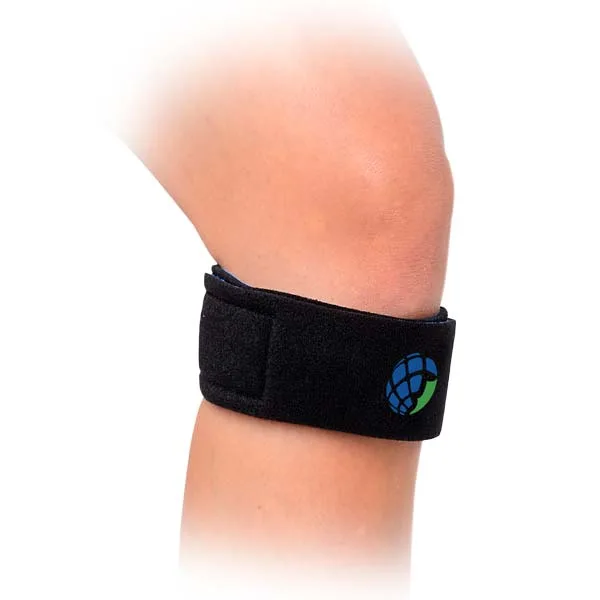
Patella Knee Strap
The standard match: focused tendon compression in a slim strap you can wear through practice and games.
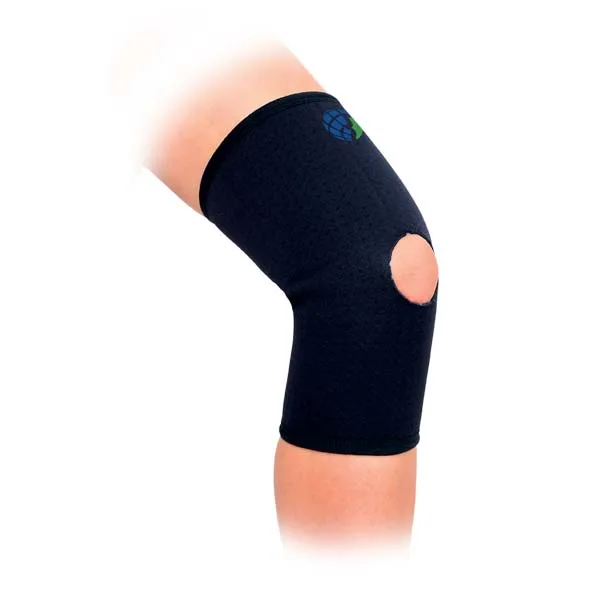
Airprene Knee Sleeve
Adds warmth and general compression around the joint for athletes who prefer full-knee coverage with an open patella.
Frequently asked questions
Will rest cure my jumper's knee?
Rest alone usually calms pain temporarily, then the pain returns the day sport does, because the tendon never regained load capacity. The lasting fix is progressive loading rehab. Rest is a tool for settling a flare, not the treatment itself.
Do patellar straps actually do anything?
Yes, for symptoms: by compressing the tendon, a strap changes the angle and distribution of pull on the painful tissue, and many athletes feel meaningfully less pain immediately. It does not rebuild the tendon, so pair it with loading rehab rather than using it to push through unchanged training.
Can I keep playing my season?
Often, within limits. Many athletes manage in-season with reduced jump volume, isometrics, a strap, and honest symptom monitoring, then do the full rebuild off-season. A tendon that hurts more each week is telling you the current load is too much.
Is it patellar tendonitis or Osgood-Schlatter?
In adolescents, pain and a tender bump sit lower, where the tendon meets the shin's growth plate; that is Osgood-Schlatter and it is managed similarly but with growth in mind. Adults with pain right under the kneecap are typically dealing with patellar tendinopathy.