
1-800-555-0142 · Mon to Fri, 9am to 6pm ET
Brace type guide

Knee immobilizers: rigid protection for the fragile phase

An immobilizer does one job without compromise: it holds your knee straight so healing tissue cannot be stressed. It is the protection of choice for the early days after surgery and serious acute injuries, prescribed for a defined window, because the goal is always to graduate out of it.

Caring clasped hands representing patient support and recovery

When immobilization is the right call

  • After surgery when the surgeon's protocol demands protected extension, common after meniscus repair, some ligament procedures, and tendon repairs
  • Acute significant injuries awaiting definitive evaluation, keeping the joint quiet and protected in the meantime
  • Stable fractures around the knee managed in extension per the treating physician
  • Severe sprains for a short calming period before transitioning to motion

Notice the pattern: every use case is clinician-directed and time-boxed. Long-term immobilization stiffens joints and wastes muscle, which is why protocols move to hinged braces or motion work as soon as healing allows.

Fitting one you can actually live in

Compliance is the whole game: an immobilizer only works while it is on, and a miserable one ends up on the chair. The difference between tolerable and miserable is fit.

  • Length matters most: the immobilizer should span well above and below the knee without jamming into the groin or catching the ankle when you walk with crutches. This is why sized models exist.
  • Three-strap minimum, snugged top first: secure above the knee, then below, then over, firm but never throbbing.
  • Stays positioned correctly: rigid bars belong at the sides and back, never rotating around to press the kneecap.
  • Skin checks daily: redness at edges means adjust the padding or strapping, not endure it.
Models our specialists match in this category

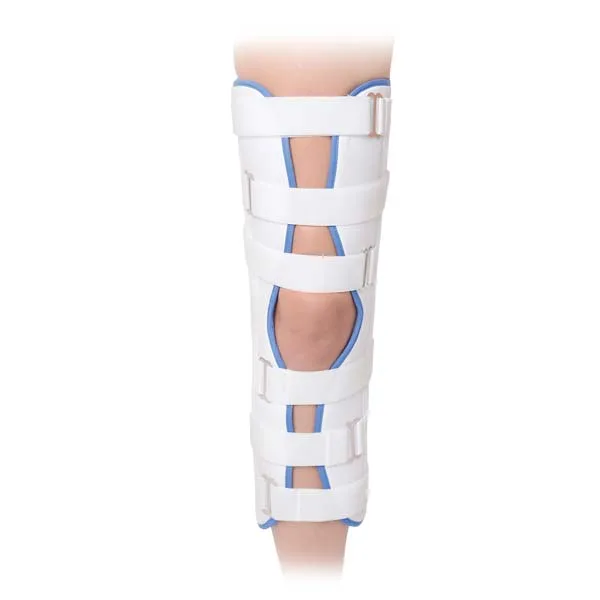
Tri-Panel Knee Immobilizer product photo

Tri-Panel Knee Immobilizer

Rigid supportPost-opAcute injury

Three-panel foam construction with rigid posterior stays holds the knee in full extension after surgery or acute injury.

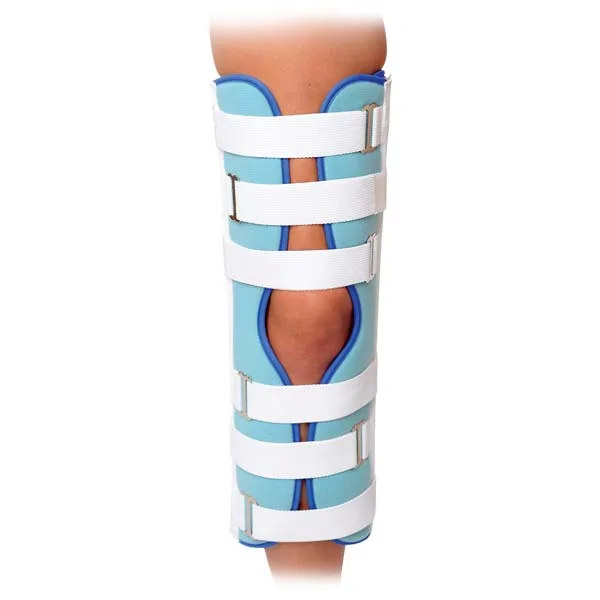
Premium Sized Knee Immobilizer product photo

Premium Sized Knee Immobilizer

Rigid supportSized fitExtended wear

Contoured, length-sized immobilizer with medial, lateral, and posterior stays for a precise fit during longer recovery periods.

Frequently asked questions

How long do people wear a knee immobilizer?

Typically somewhere between a few days and six weeks, entirely protocol-dependent. Your surgeon or physician sets the window and the weaning plan; do not extend or shorten it yourself. If the prescribed schedule feels unbearable, the right move is a fit adjustment, which is exactly what our specialists do by phone.

Can I walk in a knee immobilizer?

Usually yes, with the straight-leg gait your clinician and physical therapist teach, often with crutches early on. The leg swings through from the hip. It is awkward and tiring at first and improves within days. Follow your specific weight-bearing orders; they exist to protect the repair.

Do I sleep in it?

In the early phase, commonly yes, because sleep is when unguarded movement happens. Make night wear tolerable: loosen straps slightly (still secure), pad bony edges, and place a pillow under the calf rather than under the knee so extension is preserved.

Universal or sized immobilizer?

Sized models fit the contour of your leg better over multi-week wear, which compounds into real comfort. Universal models cover urgent and short-term needs well. If you will live in it for more than two weeks, measure and go sized, and we will help you get the length right.

Keep reading

Not sure which brace your knee needs?

Answer five quick questions and get a clinician-informed recommendation, plus a free fit consultation with a bracing specialist.

Medical disclaimer: Content on OrthoKneeBrace.com is for education only and is not a substitute for professional medical advice, diagnosis, or treatment. Always consult a qualified clinician about your injury, and call 911 for emergencies. Product and coverage details should be verified with your insurer and provider.