

What the IT band is and why it complains
The iliotibial band is a thick strip of connective tissue running from the hip down the outer thigh to just below the knee. With each stride it tensions over the outer knee, and around 25 to 30 degrees of bend it compresses a sensitive fat pad against the bone. Thousands of strides of that compression, multiplied by fatigue and load spikes, produce a predictably angry spot on the outer knee.
Modern understanding matters here: the band does not meaningfully "stretch" (it is tensile tissue nearly as stiff as tendon), so treatment built around stretching or rolling the band itself misses the point. The real levers are hip control, training load, and stride mechanics.
The signature presentation
- Sharp or burning pain on the outer knee, arriving at a consistent distance or time into a run
- Worse on downhills and slow, easy runs (more time at the compression angle)
- Fine during daily walking in early cases; later, stairs and walking can sting
- Tenderness directly over the outer knee bump (lateral femoral epicondyle)
Treatment that targets causes
- Trim the trigger dose: shorten runs below the symptom threshold and skip downhill mileage for a few weeks; cyclists check saddle height and cleat position.
- Strengthen the hip abductors: the most consistent finding in IT band research is hip weakness allowing the pelvis to drop and the knee to drift inward, ratcheting band tension.
- Cadence and stride tweaks: a slightly quicker, shorter stride reduces time in the compression zone; a running gait check pays for itself here.
- Local symptom tools: compression sleeves can dampen symptoms and add warmth; rolling the outer thigh may feel good but treat it as dessert, not dinner.
Typical recovery timeline
Every knee heals on its own schedule; treat these ranges as a common pattern, not a deadline. Your clinician's plan always takes priority.
- 1Weeks 0 to 2Below-threshold training
Run short of the symptom point, no downhills, start hip strength work.
- 2Weeks 2 to 6Rebuild distance
Add mileage gradually while strength work continues; reintroduce hills late.
- 3Weeks 6 to 10Full return
Most runners are back to normal training in this window with the hip work as a permanent habit.
Bracing options our specialists match for this condition
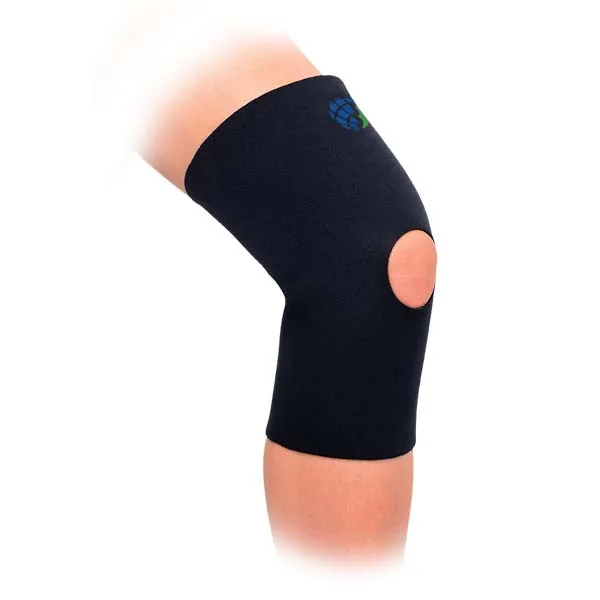
Sport Knee Sleeve Support
Light, low-profile compression for symptomatic runs during the rebuild phase.
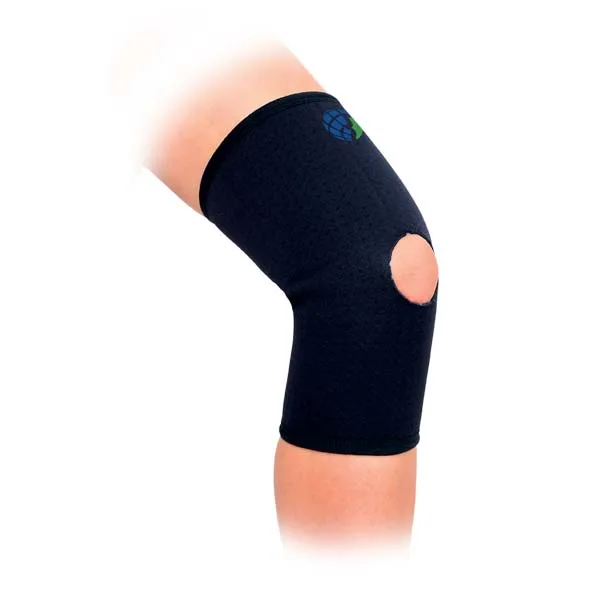
Airprene Knee Sleeve
Breathable warmth and compression for athletes who want fuller coverage on training days.
Frequently asked questions
Should I foam roll my IT band?
You can, gently, on the muscles around it (TFL and outer quad), but the band itself barely deforms under a roller, and aggressive rolling on an inflamed lateral knee mostly makes it angrier. The fixes with evidence are load management and hip strengthening.
Can I run through IT band pain?
Running below the symptom threshold is fine and even useful; pushing through escalating pain reliably backfires, because the fat pad gets more inflamed and your threshold shrinks. Find the distance that stays comfortable and rebuild from there.
Does a knee brace help IT band syndrome?
A compression sleeve can reduce symptoms and improve comfort during the rebuild, and some runners like a strap above the knee to change tension distribution. Honest framing: supports are an adjunct here; hip strength and training adjustments do the curing.
Why does it only hurt when I run, not walk?
Walking keeps the knee mostly outside the 25 to 30 degree zone where the band compresses the fat pad, and the loads are far smaller. Running puts you in that zone with multiples of body weight, thousands of times per mile. The math finds the sore spot.