
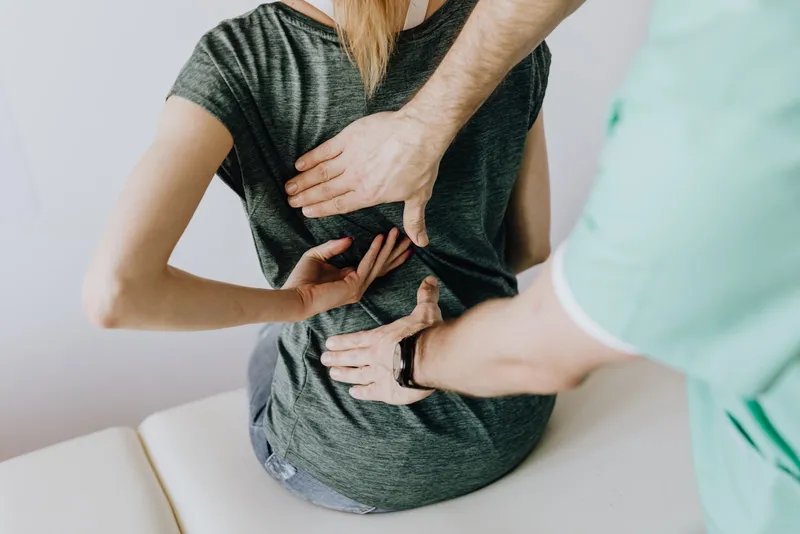
What the collateral ligaments do
The medial collateral ligament (MCL) runs along the inner knee and resists forces that push the knee inward. The lateral collateral ligament (LCL) runs along the outer knee and resists the opposite. Together they keep the knee tracking straight when life pushes it sideways.
The MCL is injured far more often, classically by a blow to the outside of the knee (a tackle, a ski fall) or a forceful pivot. LCL injuries are rarer and more often involve other structures, which is why outer-side ligament pain deserves a careful exam.
Sprain grades and what they mean for you
| Grade | What happened | How it feels | Typical healing |
|---|---|---|---|
| Grade 1 | Fibers stretched, none torn | Tender along the ligament, stable knee, walkable | 1 to 3 weeks |
| Grade 2 | Partial tear | Clear pain, swelling, some looseness when the knee is stressed | 3 to 6 weeks |
| Grade 3 | Complete tear | Often less painful than grade 2 but distinctly unstable | 6 to 12 weeks, protected |
Counterintuitively, a grade 3 tear can hurt less than a grade 2, because a fully torn ligament no longer has intact fibers to strain. Stability, not pain, is the better severity signal.
Treatment: protection is the treatment
Isolated MCL injuries, even many complete tears, heal without surgery. The protocol is protection plus motion: a hinged brace blocks the sideways stress that would re-tear healing fibers, while the hinge lets the knee bend and straighten, which healing ligament tissue actually needs to organize properly. Long-term rigid immobilization is avoided for exactly that reason.
- Hinged brace for sideways protection during healing
- Early, gentle range of motion within comfort
- Progressive strengthening of quadriceps, hamstrings, and hips
- Gradual return to cutting sports once stability testing is clean
Typical recovery timeline
Every knee heals on its own schedule; treat these ranges as a common pattern, not a deadline. Your clinician's plan always takes priority.
- 1Week 0 to 1Protect and settle
Brace on, swelling management, comfortable walking as tolerated. Grade 2 and 3 injuries may briefly use crutches.
- 2Weeks 1 to 3Motion and activation
Bend and straighten within the brace, quad sets, and stationary cycling once motion allows.
- 3Weeks 3 to 6Strength
Progressive resistance work. Grade 1 sprains are usually back to most activities in this window.
- 4Weeks 6 to 12Return to sport
Agility and sport drills for grade 2 and 3 injuries, often with the brace on for the first season back.
Bracing options our specialists match for this condition
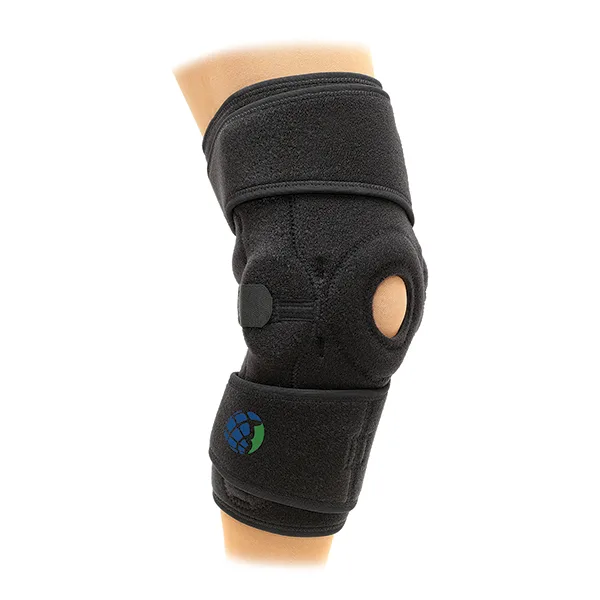
Cross-Fit Universal Hinged Knee Brace
Universal sizing with straps above and below the joint line lets you snug the support right over the healing ligament.
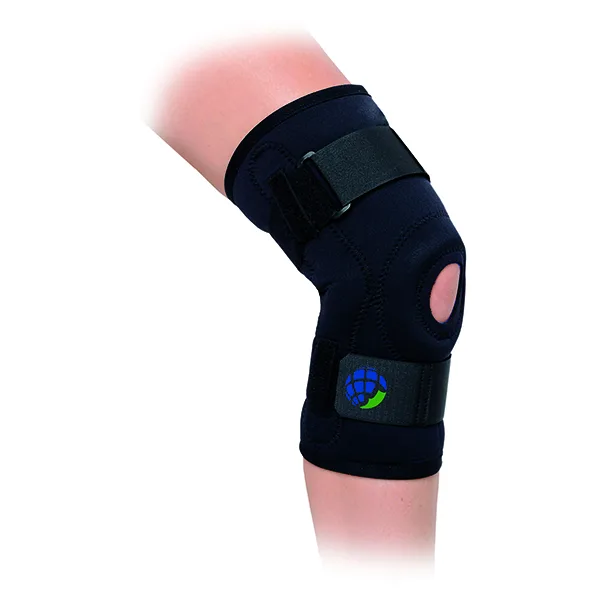
Deluxe Hinged Knee Brace
Full-circumference compression plus dual hinges for grade 2 and 3 sprains that need committed sideways protection.
Frequently asked questions
Do MCL tears need surgery?
Most do not, including many complete tears, because the MCL has a strong blood supply and heals well when protected by a hinged brace. Surgery enters the conversation mainly when the MCL tears alongside other ligaments or fails to stabilize after a full course of protected rehab.
What is the best brace for an MCL sprain?
A hinged knee brace is the textbook match: the rigid side bars take over the ligament's job of resisting sideways stress while the hinge preserves the motion healing tissue needs. This is the single condition category where hinged braces have the clearest case. See our hinged brace comparison.
Can I walk on an MCL sprain?
Usually yes, as comfort allows. Grade 1 sprains tolerate walking almost immediately; grade 2 and 3 injuries may want crutches for a few days. If you cannot bear weight at all, get examined, since that pattern suggests more than an isolated collateral sprain.
How do I sleep with an MCL injury?
A pillow between the knees keeps the joint out of the sideways-stressed position while you sleep on your side. Some patients wear the brace at night for the first week or two of a grade 2 or 3 injury for protection against unguarded movement. Our sleeping guide covers positioning in detail.